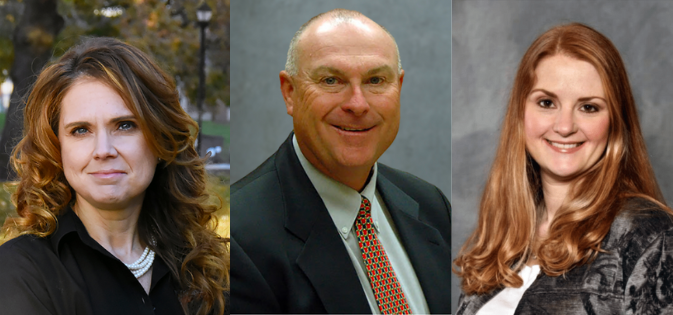
Students at Culver-Stockton College celebrated Constitution Day on September 23 with an eye-opening discussion that connected the nation’s founding principles to modern-day political boundaries and issues. The event was led by Dr. Chad DeWaard, Professor of Political Science; Professor Mevissen, Professor of History; Dr. Scott Giltner, Professor of History; and Dr. Walsh, Professor of Religion and Philosophy. Together, they guided a conversation and simulation activity on how congressional districts shape democracy, power, and representation.
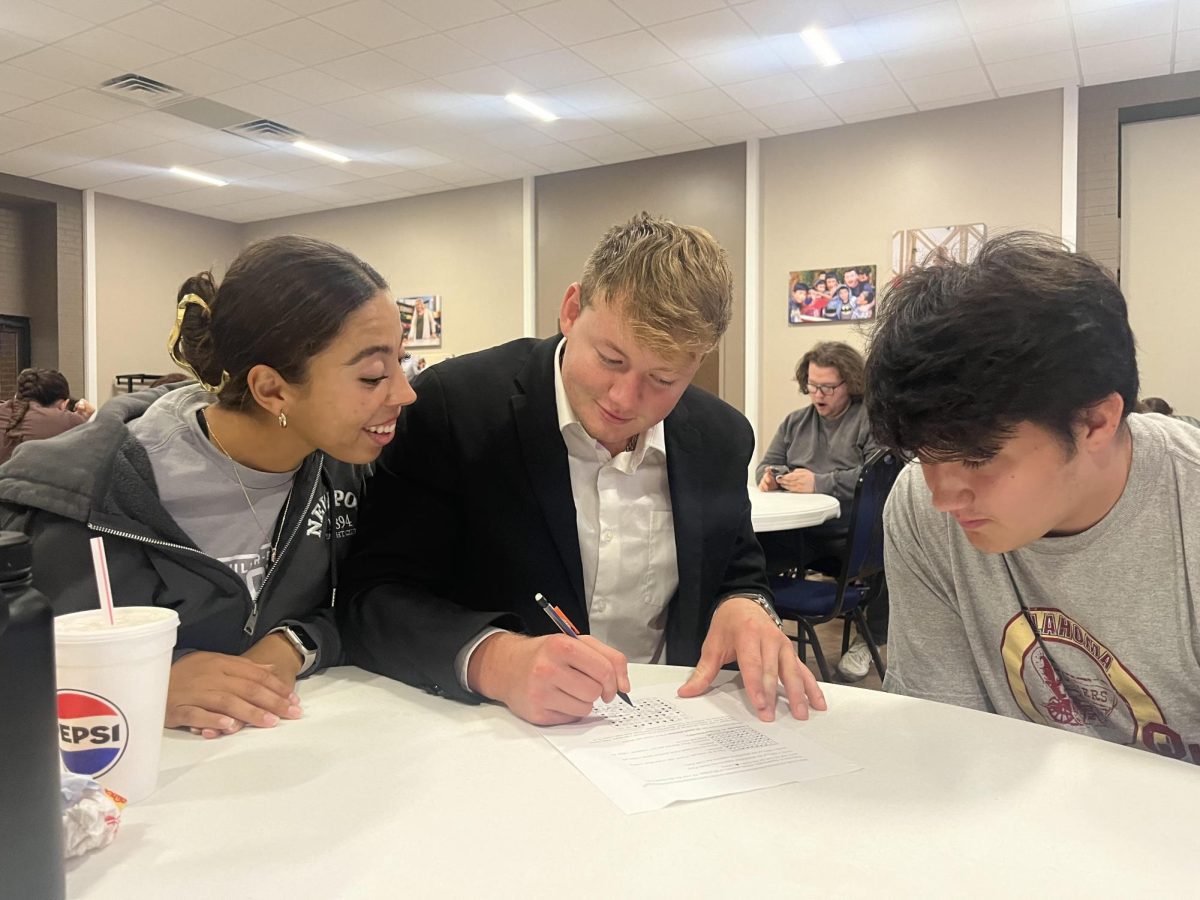
During the presentation, Professor Mevissen engaged students with an interactive activity called “A Race to the Congressional Districts.” The exercise simulated the challenges and strategies involved in redrawing congressional boundaries, offering students insight into the complexities of district mapping. Students were divided into groups, and each team’s goal was to maximize representation for their party while still following restrictions and legal requirements for population equality and proximity. As the simulation unfolded, students discovered how subtle shifts in boundaries could greatly impact election outcomes. Professor Mevissen used these observations to highlight the concept of proportionality, the balance between fair representation and political gain. He emphasized that while redistricting is meant to reflect population changes, it can also be manipulated to enhance a political party’s gain.
Sophomore Radiology student Rian Moore expressed her feedback on the simulation activity, stating, “The activity was an insightful experience and interesting how easy it appears to have gerrymandering occur and political favor for parties, all because of district drawings,” says Moore. Moore highlighted gerrymandering, the manipulation of an electoral constituency’s boundaries so as to favor one party or class. The concept was a major focus throughout the presentation and interactive activity, further highlighting its relevance and concern for political equity.
Overall, the event emphasized the understanding of drawing districts as a vital reflection on representation being political and fair in democracy. Professor Dr. DeWaard emphasized a lack of regular updates to district lines in some areas, which may risk becoming overrepresented while others lose influence, further weakening the democratic principle of equal representation. DeWaard also discussed how population transfers, urban growth, suburban expansion, and civic decline all contribute to reshaping districts nationwide. Professor Giltner reminded students that the U.S. Constitution serves as “the owner’s manual for our government.” Although the Constitution outlines the principles of representation, it is ultimately up to citizens and lawmakers to ensure those principles are upheld in practice and policies.
In closing, both Professors Mevissen and DeWaard emphasized the importance of media literacy and authenticity within today’s political climate. They urged students to think critically about the information they consume and to avoid relying on a single source for political understanding. They also encouraged students to explore a range of credible outlets, such as National Public Radio (NPR), The Economist, the Council on Foreign Relations, the British Broadcasting Corporation (BBC), and The Washington Post, to gain balanced perspectives on national and global issues. Mevissen also cautioned that while social media serves as a powerful tool for sharing information and connecting with others, it can easily become what he described as “a hate platform” when users spread misinformation.