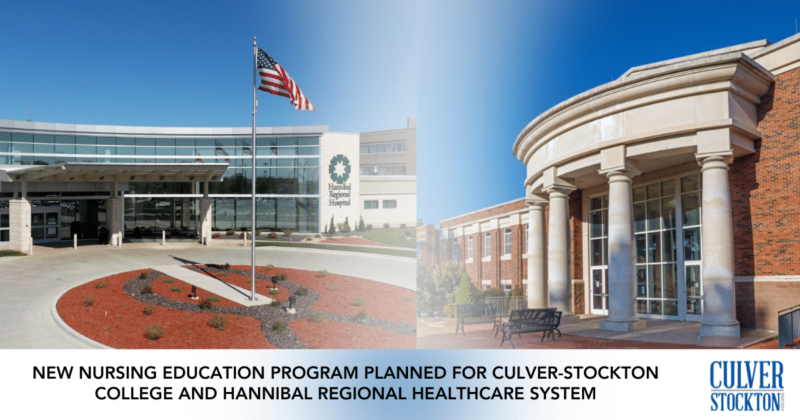
A new accelerated Bachelor of Science in Nursing (BSN) program at Culver-Stockton College is aiming to prepare workforce-ready nurses faster, while helping address a growing shortage of healthcare professionals in the region.
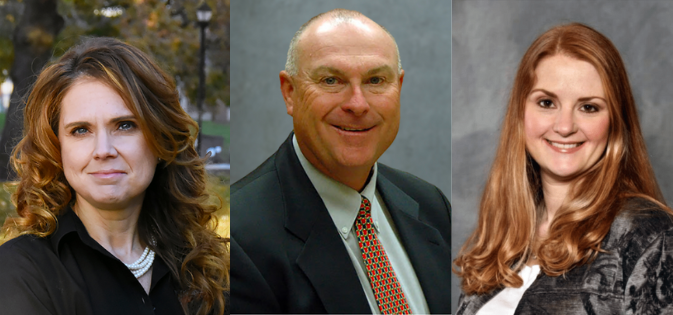
According to Director of Nursing Dr. Anne Riggs, the initiative grew directly out of healthcare needs and community partnerships. “This program is a partnership with Hannibal Regional Hospital… to create a workforce pipeline,” Riggs explained. “There’s a nursing shortage everywhere, not just in Missouri, especially after COVID-19. Many nurses burned out or moved into travel nursing, and hospitals are still dealing with that.”
The partnership with Hannibal Regional Hospital allows the college to connect education directly with employment opportunities while helping local healthcare systems fill gaps in staffing.
A Nursing Degree in Three Years
The program condenses the traditional four-year nursing degree into three years by using summer terms, all without reducing academic content. “It’s still eight semesters,” Riggs said. “It’s just packaged differently so students can graduate sooner and enter the workforce faster.”
The accelerated timeline is designed to both reduce costs and help students begin their careers quicker, something Riggs says many families are looking for. “Not everybody wants to spend four full years in college and take on that level of debt. This gives students an opportunity to finish sooner and get to work.”
Designed Around Student Needs
Flexibility was another priority when it came to designing the program. “We wanted to meet students where they are instead of making them conform to a traditional model.” Riggs said traditional nursing education often assumes students can attend classes full-time during standard weekday hours, a structure that doesn’t fit many students today. “And then for those non-traditional students that work and have kids. It’s a great opportunity for them, too. So hopefully we hit both sides with meeting that need.”
Coursework is delivered in a hybrid format. Nursing theory classes are completed online, while hands-on training takes place at the hospital through things such as labs, simulations, and more. “Students will come to the hospital for skills labs and simulations, and they’ll be in clinical at least one day a week,” Riggs said. “It’s a hybrid model with flexibility, but still very hands-on.”
That hands-on training also spans a wide range of specialties. “Because of our partnership, we pretty much have full access to the hospital,” she said. “Students can experience emergency care, ICU, women’s care; really any type of nursing you can think of.”
Preparing Workforce-Ready Graduates
One of the program’s last courses that a student will take will be their capstone, or their preceptor course, where students work directly with a practicing nurse in their chosen specialty. “They’ll spend a large number of hours just working alongside that nurse,” Riggs explained. “If they want to work in the ICU, we’ll pair them with a preceptor there so they’re ready when they graduate.”
This not only helps reduce training time after hiring, but allows graduates to transition quickly into professional roles. “Hopefully it cuts down orientation time and gets that nurse into the workforce sooner,” she said.
Direct Admission Removes Uncertainty
Another feature that sets the program apart is its direct-admit structure. Many nursing programs require students to complete prerequisite courses before applying separately to the nursing major, with no guarantee of acceptance. Riggs said that uncertainty can be frustrating for students and families. “Students can spend a year taking prerequisites with no guarantee they’ll get into the program,” she said. “We wanted to remove that barrier.”
Students who meet admission requirements are accepted into the nursing program from the start and keep their place as long as they maintain academic standards. “When you begin college, you already have your seat. You just need to continue meeting the requirements.”
Strengthening Healthcare in the Community
Beyond student benefits, the program is designed to support the region’s healthcare system. Hospitals often operate with dozens of unfilled nursing positions, a reality that affects patient care. “When you have vacancies, you have to think about how that affects patient care and nurse-to-patient ratios,” Riggs said. “Our goal is to increase the number of nurses in the area so we can improve the quality of care.”
She hopes graduates will help stabilize staffing across hospitals, clinics, and long-term care facilities.
Building Something That Lasts
For Riggs, one of the most meaningful parts of launching the program is its long-term impact.
“It’s exciting, just the opportunity to be a part of something that hopefully will last a lot longer than past me,” she said. “We’re creating something that benefits students, the hospital, and the entire community.” Ultimately, she sees the program as both an educational opportunity and a community investment, preparing new nurses while strengthening healthcare access for years to come. “Hopefully we’re creating an environment that helps students succeed and helps meet a real need,” Riggs said.