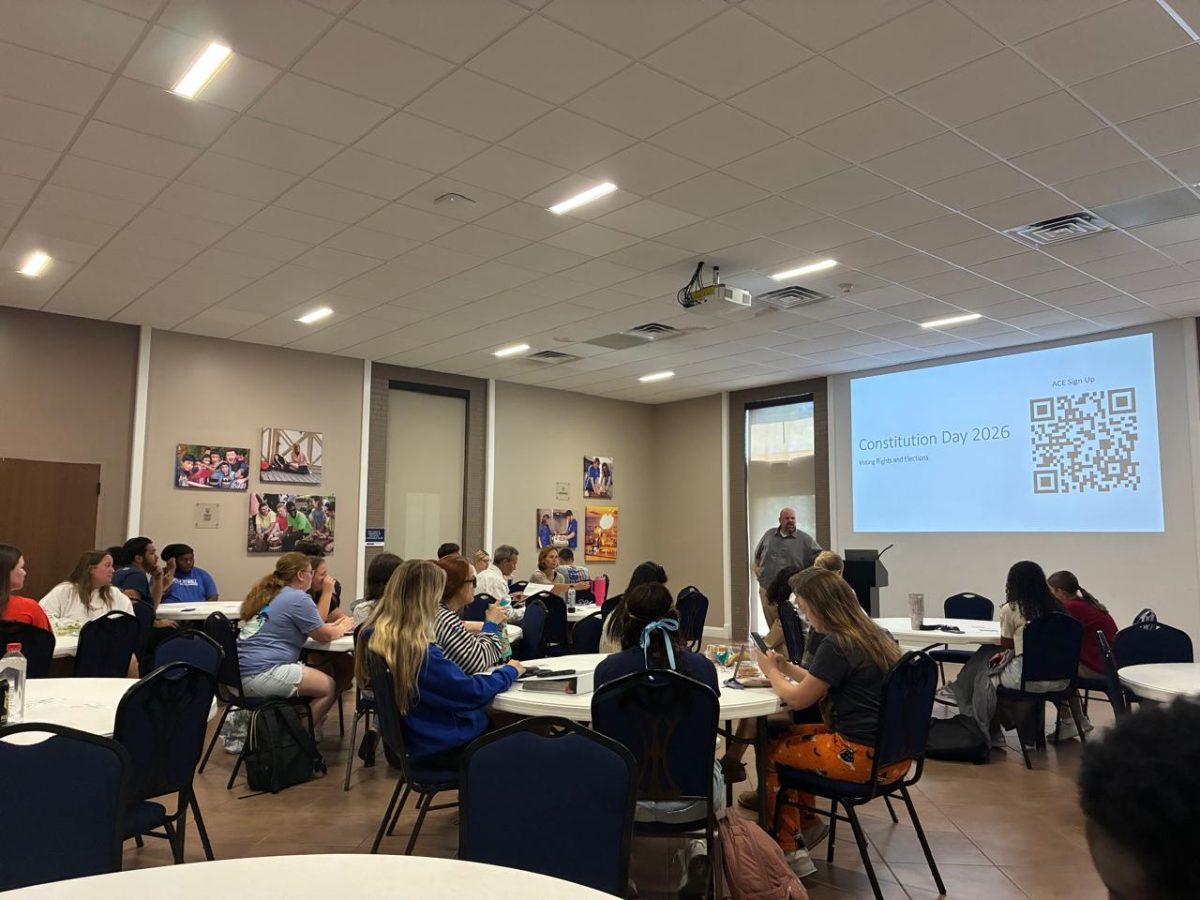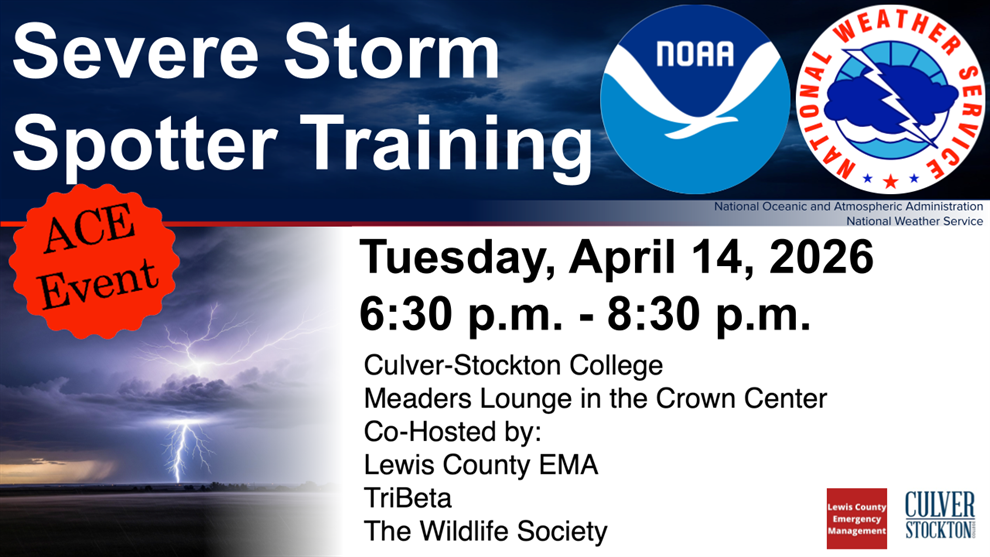
On Tuesday, Apr. 14, the Culver-Stockton Tri Beta Biology honor society, Lewis County EMA, and The Wildlife Society hosted a Storm Watching certification class and ACE event. Teaching the class was Jared Maples, a representative from the National Weather Service.
The event was around two hours long and featured in-depth content regarding the importance of storm watchers, what they do, who to call when reporting, and how to identify storms/weather patterns. The class also featured interactive activities in which students were asked to identify certain weather elements, like wind speed, funnel clouds vs. tornadoes, and different types of clouds, in different scenarios/videos.
By the end of the class, students were able to identify and differentiate weather patterns into different categories of severity and what would actually need to be reported to a news station.
Senior Matthew Reese, president of Tri Beta, was very happy with how the event went. “I think the students definitely got some great information out of the event,” Reese said, “Especially with living in the Midwest, where we see quite a few severe storms. Some students may have never experienced tornadoes or severe storms, and this was a great event for them to learn more by watching and paying attention to severe weather.” Reese also touched on the Canton community presence at the event. “We also had community members there, and I believe becoming a certified storm spotter was beneficial to themselves as well as the community.”
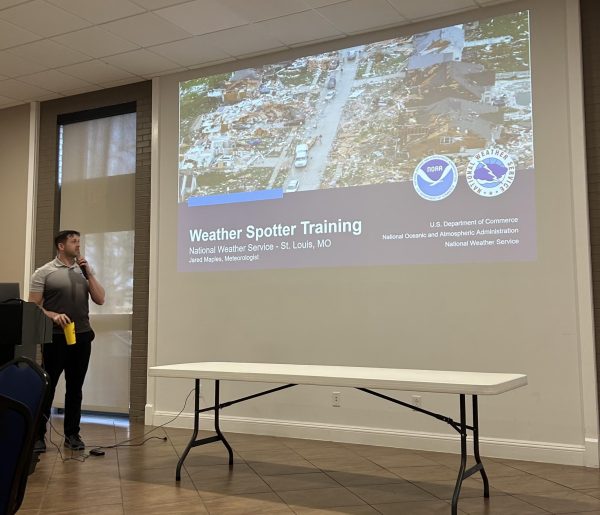
Maples shed a little bit of light on why storm spotters are so important. “Despite the fact that technology has expanded and continued over the last 20, 30-plus years, there’s still a gap in space that you can’t account for,” Maples stated. “One of those gaps is that the Earth is curved, and when radar beams go out, they go higher in the air. There are several other factors where you can’t see things on the ground, and these spotters are that coverage to get verification that something is or isn’t happening.” As for why someone would want to be a storm spotter, Maples said that storm spotters can not only protect their community, but also themselves. “When you live in a rural area, you don’t have access to some of the information that more urban areas have. You will have that information at your disposal to be able to make those decisions and know where the storm’s heading or what’s developing to keep you more informed for that situation.”
With all the bad weather that’s been hitting Canton and the surrounding area as of late, it only seemed fitting to hold an ACE event such as this one. Now, thanks to the event, many students are better educated on how to recognize weather patterns that can pose an actual threat, and they know how to contact local weather stations in order to protect themselves and others.