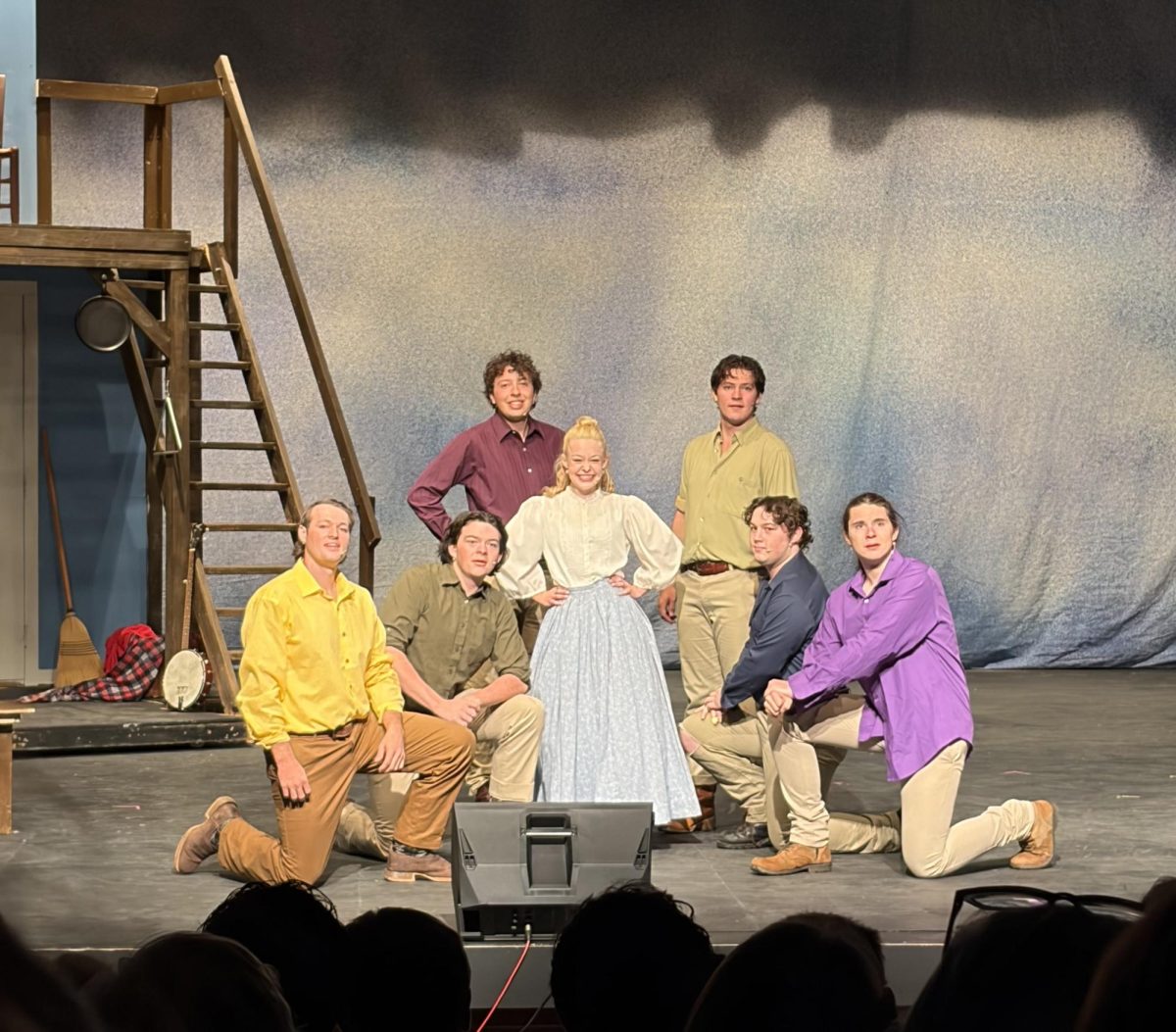
On homecoming weekend, the Culver-Stockton Theater Department premiered this semester’s musical, Seven Brides for Seven Brothers.
Seven Brides for Seven Brothers is a musical comedy that first premiered in 1954. The theater department ended up doing this play because they were unable to get the rights to the first play they wanted to do, which was Legally Blonde.
Although the play is a bit outdated in some of its comedy and beliefs, the actors from the theater department got a lot from it.
Senior lead actor, Addi Wetzel, said, “Although this is not my favorite show I’ve done, this show was a great learning experience,and I feel it allowed me to grow quite a bit. It helped me as both a designer and an actor doing such a different style show.”
Wetzel also said that this musical was especially challenging for her. “I haven’t done a golden age musical in a very long time, so it was tough at first, but it was a fun challenge to try a new style.”
Wetzel touched on some of the controversial topics, like outdated gender roles, that appeared in the play. “One of the things we tried really hard to convey is that the show is Millie and the girls’ stories. I worked very hard to make Millie a strong, independent woman who had a lot more to her than just the man she was married to.”
Along with starting as the main character in the musical, Wetzel was also a designer and choreographer for the play. She stated that she enjoyed doing such a unique kind of play, because “it increased my overall skill as a designer and made me more versatile.” On the choreography side of things, one of the dance numbers Wetzel was most proud of was “Sobbin’ Women”. “I choreographed the whole song for the boys,” Wetzel said. “It was extremely rewarding to see my choreo on stage for the first time and to see it done so well.”
Even though Seven Brides for Seven Brothers wasn’t what the Culver Stockton Theater Department originally had in mind for the fall semester play, they were still able to do a lot with it. All three shows almost filled the Performing Arts Center, and the play was well received by the Culver-Stockton student body.